
Coffee system integration is a kitchen-planning decision, not simply an appliance purchase. Uxbridge homeowners usually choose between a fully integrated coffee machine, a built-in coffee appliance with a defined cabinet position, and a freestanding coffee station.
The best option depends on how often you make coffee, the drinks you prefer, the space available, your tolerance for visible equipment, and how early you are prepared to resolve cabinetry and technical requirements. MODENHAUS serves Uxbridge from its Ruislip showroom and offers appliances as part of its wider kitchen service.
Quick summary

- Choose a fully integrated system for the cleanest cabinetry-led appearance and least countertop clutter.
- Choose a built-in appliance for a coordinated installation with a clearly defined machine position.
- Choose a freestanding station when flexibility, easier replacement, or relocation matters most.
- Select the appliance before cabinet production so its dimensions, access requirements, and utility needs can be checked.
- Plan the coffee zone alongside refrigeration, ovens, extraction, lighting, storage, and serving space.
Coffee System Integration Options Compared
A fully integrated coffee system is treated as part of the cabinetry composition. A built-in coffee appliance is a defined unit installed into a housing or tall cabinet. Both require early coordination, while a freestanding machine sits on a worktop, shelf, or furniture-based coffee station.
Fully integrated coffee machine

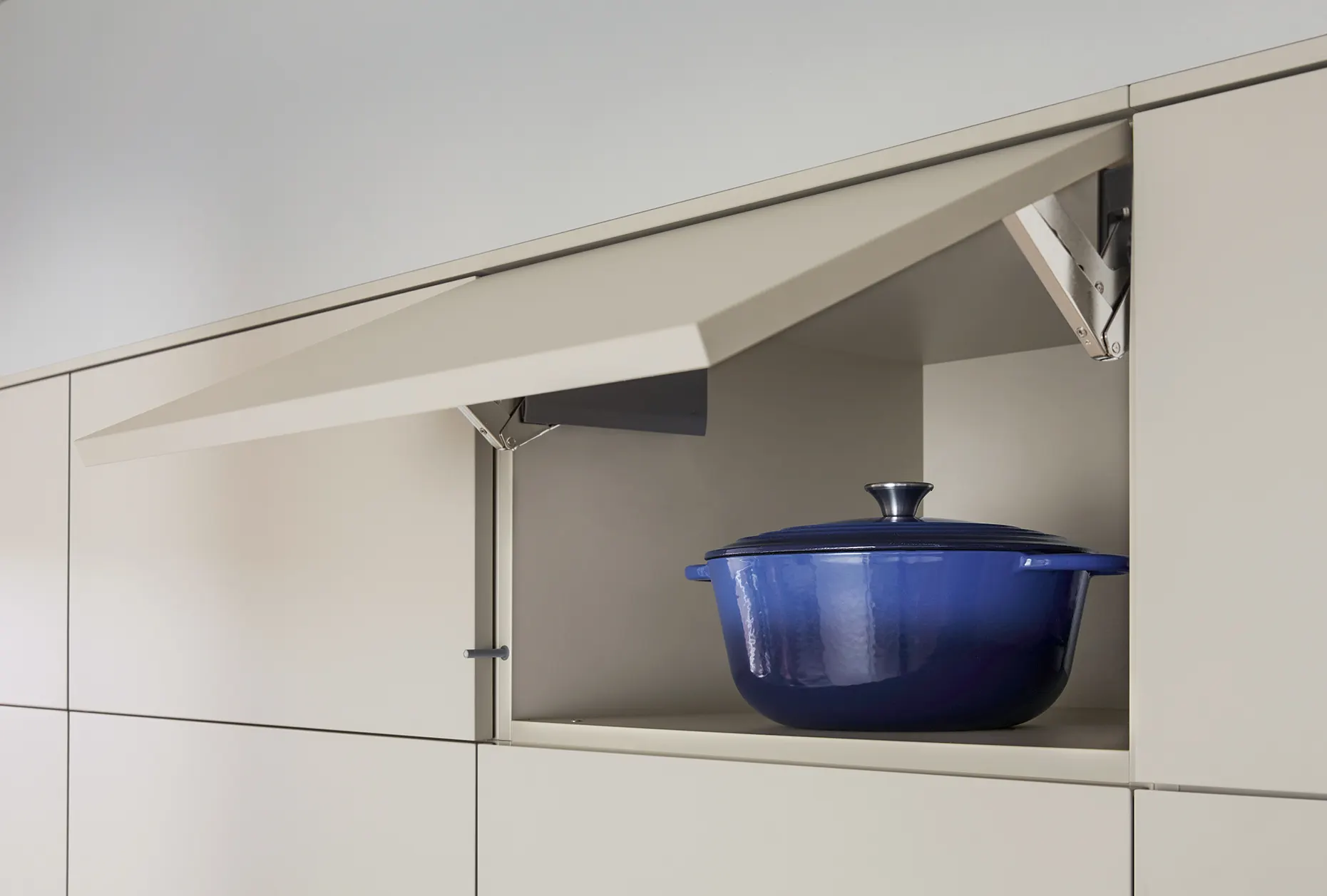
A fully integrated coffee machine can create the most seamless result in a contemporary kitchen. It is incorporated into a cabinetry run, often alongside ovens, refrigeration, or tall storage, so the room reads as one considered composition rather than a collection of countertop products.
This approach suits homeowners who prioritise visual continuity and clear worktops. The design must still allow enough room to open the door, fill or remove components, place cups, and complete routine cleaning.
The tradeoff is commitment. Cabinet dimensions, surrounding panels, service positions, and access must be resolved before production. A machine that looks compact in a catalogue may still need clearance around its door, water container, bean hopper, drip tray, or removable brewing components. Requirements vary by model, so use the final appliance specification rather than assumptions.
Built-in coffee appliance
A built-in coffee appliance offers a defined position within the kitchen and can be coordinated with other integrated appliances. It may suit homeowners who want the machine at a comfortable height, grouped with ovens, or positioned within a tall run rather than occupying the island.
The main benefit is controlled planning. The designer can establish the appliance width, finish, adjacent storage, and relationship with the worktop before the cabinetry is ordered. A built-in unit may also suit a kitchen where coffee is important enough to deserve a permanent place, without requiring a separate coffee area.
Flexibility may be reduced if the kitchen layout changes later. Replacing the appliance can involve checking the new model against the existing housing, electrical provision, ventilation paths, and access. That is a reason to specify carefully, not necessarily to avoid the format.
Freestanding coffee station
A freestanding coffee station is often the most flexible choice. You can replace or relocate the machine more easily, choose a countertop model after the main kitchen has been designed, and adapt the station as your habits change.
The compromises are visible equipment and the worktop area it occupies. The station needs room for the machine, cups, beans or pods, milk, cleaning products, and preparation. It should not obstruct food preparation, create a morning bottleneck, or compete with the main sink and hob.
Which option fits your kitchen?
| Option | Appearance | Flexibility | Planning complexity | Best suited to |
|---|---|---|---|---|
| Fully integrated system | Seamless and cabinetry-led | Lower after installation | High | Uncluttered kitchen designs |
| Built-in appliance | Coordinated and defined | Moderate | High, with model-specific checks | Regular users wanting a permanent position |
| Freestanding station | Visible and furniture-like | Highest | Lower permanent commitment | Homeowners valuing replacement and relocation |
Maintenance is not automatically easier with one format. The practical question is whether the machine can be accessed for cleaning, filling, emptying, and servicing, and whether the location follows the manufacturer’s instructions.
Plan Around How You Actually Use Coffee
Start with your routine rather than the appliance’s appearance. Consider whether you mainly make espresso, filter-style drinks, milk-based drinks, or several types throughout the day. Frequent users may value an accessible location, while occasional users may prefer a flexible station that does not consume cabinet space.
Think about who will use the machine and when. A coffee zone near the breakfast area may support a busy morning routine, while a position close to refrigeration and a preparation surface may work better for milk-based drinks and entertaining. User height also matters, particularly when a built-in machine is placed in a tall cabinet.
List the supporting items before approving the layout. Beans or pods, mugs, milk, a grinder, waste, cleaning products, and serving trays all need somewhere to go. Without this storage, even an attractive integrated coffee system can leave the worktop crowded.
Resolve Layout and Cabinetry Before Ordering
Select the coffee appliance alongside the cabinet plan, not after the kitchen has been drawn. Its dimensions can affect cabinet widths, shelf positions, door openings, neighbouring appliances, and available storage.
Check the relationship between the coffee zone and the worktop. You may need a clear surface for placing cups, transferring drinks, or handling milk. Also consider splashbacks, lighting, socket positions, opening directions, and circulation routes.
MODENHAUS describes a planning process using 3D layouts, appliance options, physical material samples, and detailed technical specification before production. Its appliance service covers ovens, induction hobs, refrigeration, wine storage, coffee systems, and smart kitchen technology. Review its integrated coffee systems alongside the wider appliance schedule.
Confirm Utilities and Technical Requirements
Do not assume every built-in coffee machine needs the same connections. Depending on the model, installation may involve an electrical supply and requirements relating to water, drainage, ventilation, or cabinetry ventilation paths. The appliance documentation and installer should confirm what applies.
- Record the final appliance model, dimensions, and installation instructions.
- Confirm electrical load, socket position, and isolation access.
- Check whether water or drainage connections are required or optional.
- Confirm ventilation, cooling, or cabinet air-path requirements.
- Allow clearance for doors, removable tanks, drip trays, hoppers, and servicing.
- Coordinate the coffee system with ovens, refrigeration, extraction, and lighting.
MODENHAUS states that its appliance coordination includes electrical circuit loads, ducting cross-sections, and custom cabinetry ventilation paths. These checks should still be applied to the selected appliance rather than treated as a standard specification for every coffee machine.
Design the Coffee Workflow Around the Machine
A useful coffee zone has a simple sequence: retrieve ingredients, prepare the drink, serve it, and clear away. That may mean placing cups above or beside the machine, keeping beans or pods in a nearby drawer, and providing a landing area for mugs and milk.
For a freestanding station, avoid using the only uninterrupted preparation area if the kitchen is compact. For a built-in system, ensure the machine is not so high or tightly enclosed that loading and cleaning become inconvenient. The best position supports real household movement through the room.
How a Kitchen Designer Should Specify the System
A strong specification moves from lifestyle questions to technical confirmation. Discuss coffee habits, preferred drinks, frequency, budget, and the desired visual relationship with the kitchen. Then test the proposed position in a 3D layout and check surrounding storage and circulation.
Review appliance options and physical finishes together. Cabinet colour, handles, worktop, splashback, and adjacent appliances should be assessed as a group. Once the preferred unit is known, record dimensions, clearances, service requirements, and future maintenance access.
Later stages should include an accurate site survey, final verification before manufacturing, coordinated installation, and commissioning. Commissioning allows the installer to check the completed arrangement and explain operation, but it does not guarantee that every machine suits every layout.
Uxbridge Coffee System Planning Checklist
- What drinks do you make, and how often?
- Will the machine be fully integrated, built in, or freestanding?
- Where will cups, beans or pods, milk, waste, and cleaning products go?
- Is there a clear surface beside the machine?
- What are the exact dimensions, opening clearances, and servicing requirements?
- Does the model need particular electrical, water, drainage, or ventilation provision?
- How will the coffee zone relate to refrigeration, ovens, extraction, lighting, and the sink?
- Can every regular user access the machine comfortably?
- What happens if the appliance is replaced later?
- Will the final design include installation checks and commissioning?
Planning Coffee Appliance Integration in Uxbridge
MODENHAUS Kitchens & Interiors is based at 113 Victoria Road in Ruislip and serves Uxbridge, including UB8 and UB10, Hillingdon, Cowley, and Ickenham. Its verified local offering includes German kitchens, fitted interiors, stone worktops, and appliances, so coffee planning can form part of a wider kitchen project.
For homeowners seeking appliances in Uxbridge, the showroom is in Ruislip while the design and appliance service covers Uxbridge homes. A consultation should establish project scope, the chosen appliance, and technical questions before approval.
Frequently Asked Questions
What is the difference between a built-in coffee machine and an integrated coffee system?
A built-in coffee machine is installed into a defined cabinet housing. An integrated coffee system is a broader design concept in which the machine, cabinetry, storage, worktop, and supporting services are planned together.
Should a coffee machine be chosen before kitchen cabinets are ordered?
Yes. Identify the appliance early enough to verify dimensions, clearances, electrical requirements, and any water, drainage, or ventilation needs. Ordering cabinets first can compromise access, storage, or positioning.
Does an integrated coffee machine always need plumbing or ventilation?
No. Requirements vary by model and installation method. Confirm the manufacturer’s instructions and coordinate the relevant services with the designer and installer.
Can MODENHAUS help homeowners in Uxbridge plan kitchen appliances?
MODENHAUS offers appliance selection and serves Uxbridge from its Ruislip showroom. A consultation should establish the project scope, chosen appliance, and technical questions before approval.
Conclusion: Choose the Coffee Setup Before the Kitchen Is Finalised
A fully integrated coffee system suits a cabinetry-led kitchen where visual continuity and clear worktops matter most. A built-in appliance provides a defined, coordinated position, while a freestanding station offers the greatest flexibility and lowest commitment to permanent housing.
Decide alongside the cabinetry, storage, worktops, lighting, utilities, and wider appliance schedule. To discuss tailored kitchen and appliance planning for Uxbridge, contact MODENHAUS Kitchens & Interiors.