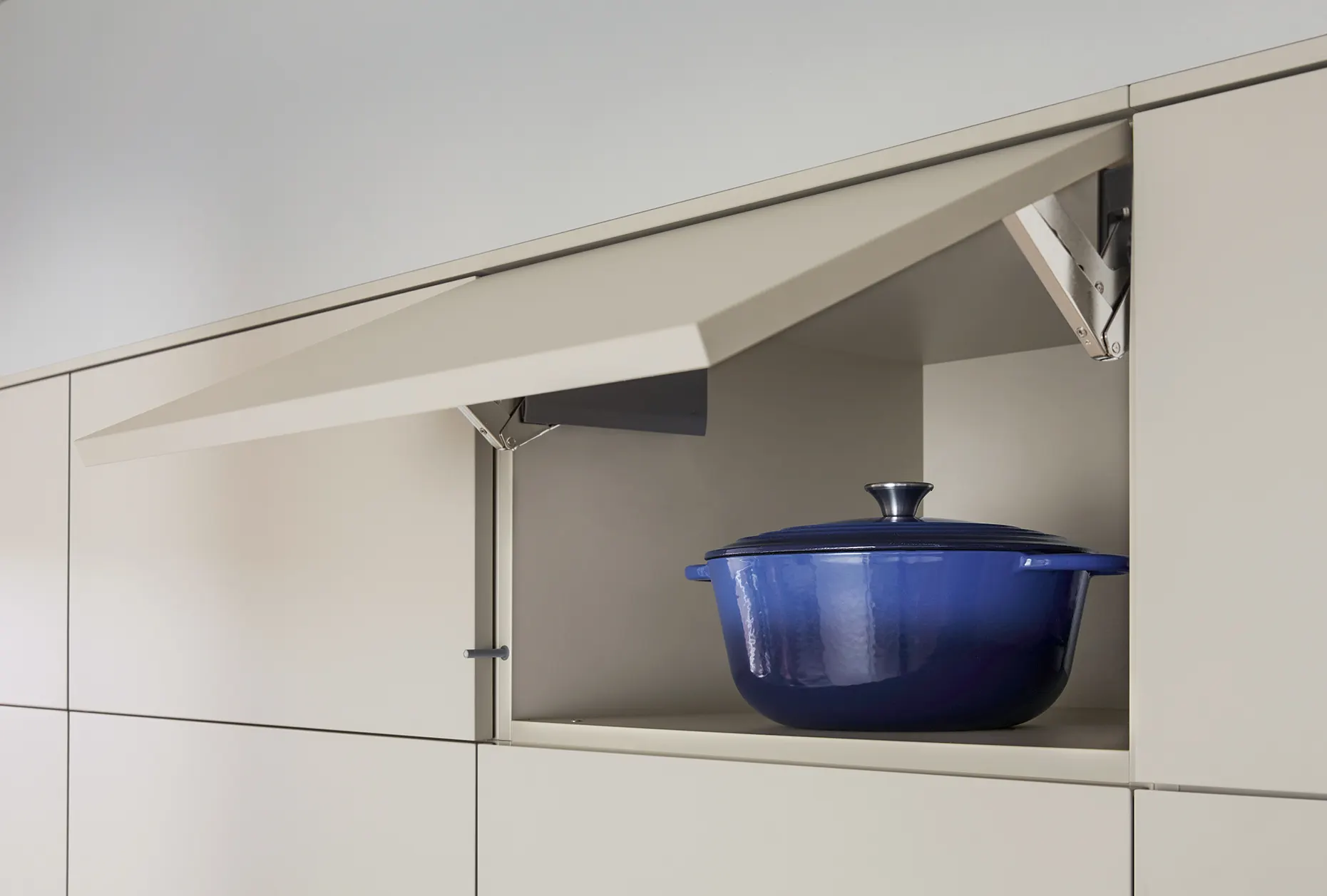

A German kitchen showroom in Ruislip should help you compare cabinetry, finishes, worktops and appliances while discussing how the room needs to function. MODENHAUS Kitchens & Interiors is based at 113 Victoria Road, Ruislip, HA4 9BN, and visits are by appointment. Bring your plans, measurements, appliance preferences, lifestyle requirements and realistic budget.
What to expect from a German kitchen showroom appointment

A worthwhile showroom visit is more than choosing a door colour. You should be able to examine displays and samples, explain how your household uses the room, discuss practical constraints and leave with clear next steps.
At the Ruislip showroom, you can compare kitchen options, stone surfaces and appliances in person. This helps you judge reflectivity, texture, handle comfort and how materials work together under your home's lighting.
What to bring
- Architect or builder floor plans, even if preliminary.
- Rough measurements of walls, ceiling height, windows, doors and fixed obstacles.
- Photographs or video showing the room from each corner.
- A list of appliances you want to keep, replace or add.
- Storage problems such as pantry space, recycling, small appliances or school bags.
- Examples of finishes you like and want to avoid.
- An investment range and priorities for allocating the budget.
Rough measurements are useful for discussion, but a design should not be ordered from them. Technical verification comes later through the agreed survey and specification process.
What the appointment should clarify
Ask what happens after the first meeting. A useful answer should explain how the brief becomes a layout, when you see 3D visualisation, how finishes and appliances are selected, what the quotation includes and who coordinates technical details.
Project quotations commonly vary with room size, layout, cabinetry range, worktops, appliances and installation requirements. No reliable project price can be given before the specification is understood.
What makes German kitchens different in practical terms?
German kitchens are not automatically better than every other fitted kitchen. Their appeal usually comes from modular planning, factory-engineered cabinetry, coordinated storage and integrating the kitchen into the architecture of the room.
Modular planning uses coordinated cabinet widths, heights and internal components. This can help organise a long run, tall bank or island, although the modules still need to suit the walls, openings and circulation space in your home.
Precision is useful only when the planning is precise
Factory production provides a consistent basis for installation, but it does not remove the need for careful design. Uneven walls, sloping floors, service positions, extraction routes and appliance clearances must be resolved before manufacture.
MODENHAUS combines German cabinet engineering with architectural spatial planning. Its process includes 3D visualisation, technical surveys, factory ordering, fitting, stone templating, appliance commissioning and handover. Confirm the exact scope before committing.
Storage and appliance integration
A German kitchen can be planned around where ingredients are stored, preparation happens, bins are accessed and small appliances are kept. Integrated refrigeration, ovens, hobs and extraction can create a calmer appearance, but each choice affects ventilation, electrical loads, cabinet dimensions and servicing access.
A highly coordinated specification requires earlier decisions. Changing an appliance, sink position or extraction approach after production begins can affect cabinetry, worktops and services.
Schüller, next125 and Impuls: how to compare the available brands
There is no universal ranking that makes one of these brands best for every homeowner. Schüller, next125 and Impuls are the German kitchen brands offered by MODENHAUS. The right choice depends on the room, visual language, storage brief, specification and budget.
The German kitchen brands available through the studio are discussed alongside contemporary, handleless, open-plan, Shaker and luxury kitchen styles. Compare how each range answers your brief instead of asking which brand wins in the abstract.
Questions that help you compare the ranges
- Which visual language suits the house? Handleless cabinetry can support a clean architectural look, while Shaker furniture may sit naturally within a period property.
- How much storage must fit? Count tall units, drawers, pantry storage, corner solutions and internal organisers, not just doors.
- What proportions does the room need? A tall bank that suits a large extension may overwhelm a narrow kitchen.
- Which materials and details matter? Compare fronts, edge details, handles or profiles, internal fittings, panels, plinths and wall junctions.
- Where should the budget go? You may prioritise storage, worktops, extraction, appliances or installation detail.
Are German kitchens good quality? They can be a strong option when the cabinet specification, design, installation and aftercare suit the project. Country of manufacture alone is not a substitute for checking construction, technical detail, fitting responsibility and quotation scope.
What is special about German kitchens? The practical distinction is the coordinated system of cabinet dimensions, storage components, finishes and appliances. That can support efficient use of space, but it demands disciplined measurement and specification.
What MODENHAUS can coordinate beyond the display

When comparing showrooms, assess the route from first conversation to handover. A provider may show excellent displays but leave you to coordinate builders, electricians, stone fabricators and appliance installers. Ask exactly where responsibility starts and ends.
MODENHAUS describes support that can include 3D visualisation, technical surveys, factory ordering, fitting, stone templating, appliance commissioning and handover. Ask for the agreed scope in writing so you know which tasks and trades are included.
Technical questions worth asking
- Who measures the room before the order is released?
- How are wall levels, floor levels, pipe runs and electrical positions recorded?
- Who coordinates the builder, electrician, plumber and extraction installer?
- Where will extraction ducting run?
- Which sockets, lighting points and switches must be decided before manufacture?
- Who templates and installs the stone, including sink, hob and tap cut-outs?
- Who installs and commissions the appliances?
- What happens if site conditions differ from the drawings?
- What support is available after handover?
Compare product quality separately from service scope and price. Review cabinetry, materials, design detail, technical surveying, installation responsibility, exclusions, payment stages, changes and aftercare. A lower quotation may leave more coordination or site work outside its scope.
How German kitchen pricing works in the UK
There is no dependable single typical price for a German kitchen in the UK. The total is formed by the room, layout, cabinetry, surfaces, appliances and preparation work, so a price without those details can mislead.
The main cost drivers
- Room size and cabinet quantity: Units, tall housings, panels and internal storage increase the furniture cost.
- Layout changes: Moving plumbing, electrics, heating, walls or extraction adds trade work.
- Cabinet range and specification: Fronts, finishes, profiles, organisers, lighting and bespoke details affect cost.
- Worktops and stone details: Material, thickness, edge treatment, joins, upstands, splashbacks, waterfalls and cut-outs matter.
- Appliances: Number, type, integration method and installation requirements change the allowance.
- Installation complexity: Uneven walls, period features, restricted access and structural work extend the scope.
- Project responsibility: Design, delivery, fitting, templating, commissioning, waste removal and aftercare may be included or excluded.
Use a quotation checklist
Check that each quotation identifies the cabinetry range, fronts, panels, fillers, plinths, handles or profiles, internal storage, worktops, sinks, taps and appliances. It should also state what is included for delivery, fitting, stone templating, appliance commissioning and making good.
Ask for builder, electrician and plumber responsibilities in writing. Look for exclusions covering structural work, flooring, decorating, service alterations, extraction, waste removal and building-control matters where relevant. Confirm payment stages, approval points, changes after approval and aftercare.
Showroom information does not state one standard kitchen price because the specification determines the quotation. Share your plans and budget during the consultation so investment can be focused on what matters most to your household.
Is a Ruislip German kitchen showroom suitable for your home?

A local showroom is particularly useful when your project involves more than replacing doors in an unchanged room. Ruislip homes can include inter-war semis and detached properties, extensions, open-plan conversions and older features that affect layout, services and storage.
A worked local scenario
Imagine an inter-war semi opening towards a rear extension. The brief is not simply to fit an island. The designer needs to test circulation, sightlines, extraction, appliance locations, structural changes, natural light, pantry storage and utility functions.
If the original room has a chimney breast, uneven walls or limited service routes, those constraints should appear in the drawings before cabinetry is ordered. Ask who is responsible for each builder and trade interface.
The same reasoning applies to modernising within the existing footprint. Keeping plumbing in place may reduce disruption, while changing working zones may improve the room more than moving every service.
MODENHAUS is based in Ruislip and also works with homeowners in Pinner, Harrow, Northwood and Uxbridge, as well as across Greater London and the Home Counties. Its wider fitted-interiors offering includes wardrobes, media walls, home offices and utility rooms.
Questions to take to the showroom
Write down the answers. The aim is to find out whether the proposed service matches the complexity of your home.
Design and brand questions
- Which of Schüller, next125 or Impuls best fits my layout and priorities, and why?
- How will the design address my storage problems and daily cooking routine?
- Can I compare handleless, Shaker and contemporary options using physical samples?
- Which details are fixed by the selected range, and which can be tailored?
Materials and appliances
- Which worktop materials suit how I cook and maintain a kitchen?
- How will the sink, tap, hob, appliances and extraction work together?
- Where will small appliances, recycling, cleaning products and food storage go?
- What access is needed for servicing and ventilation?
Installation and commercial scope
- Who completes the survey and approves the technical drawings?
- Which trades are coordinated by the showroom?
- What does the quotation exclude?
- Who is responsible for stone and appliance work?
- What is the process for changes, defects, snagging and aftercare?
Frequently asked questions about German kitchens in Ruislip
Can I visit the MODENHAUS showroom without an appointment?
Visits and design consultations are by appointment. The showroom is at 113 Victoria Road, Ruislip, HA4 9BN. Contact the studio before travelling.
Do German kitchens cost more than other fitted kitchens?
They can cost more or less depending on the specification, room, worktops, appliances, installation and project scope. Compare what the quotation includes, not only the label “German”.
Can a German kitchen showroom work with an existing extension or builder?
Yes, but responsibilities must be agreed in writing. Provide the latest drawings and identify who controls structural work, plumbing, electrics, extraction, flooring and final making good.
What should a German kitchen quotation include?
It should identify cabinetry, finish, storage, worktops, sinks, taps, appliances, delivery, installation and any stone or appliance work included. It should also list exclusions, trade responsibilities, payment stages, approval points and aftercare.
Which German kitchen style suits a period Ruislip home?
A Shaker kitchen can complement traditional proportions, while a carefully detailed contemporary or handleless design can provide deliberate contrast. The choice depends on the architecture, ceiling height, adjoining rooms and storage requirements.
Next step: arrange a considered showroom visit
If you are ready to test layouts, finishes and project scope in person, arrange a consultation with MODENHAUS Kitchens & Interiors at its Ruislip studio. Bring your plans, photographs, measurements, priorities and budget, then use the discussion to assess whether the proposed design, quotation and installation responsibility fit your home through the Ruislip kitchen design consultation route.