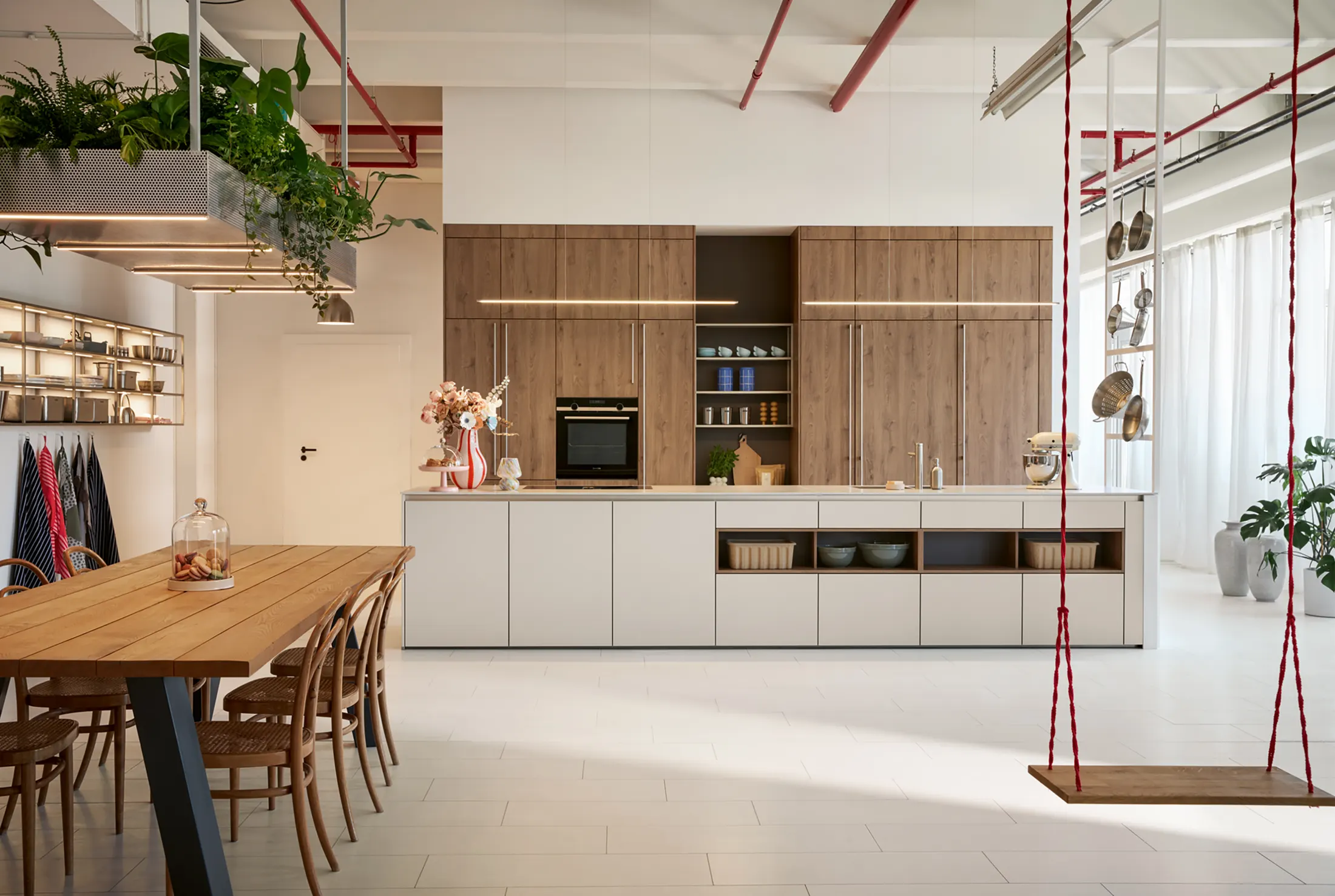
A German kitchen is a kitchen made by a German manufacturer, usually from a modular system of cabinets in standard widths and heights that a planner fits to your room. The term has become shorthand in the UK for a well-made, carefully planned kitchen. This guide explains what it covers, which brands to know, how German kitchens compare with British ones, and how to judge a quote.
What is a German kitchen?
A German kitchen is manufactured in Germany by one of the country's many kitchen makers and sold in the UK through showrooms and studios. Most are built from a modular system: base units, wall units and tall units in a set of standard widths, heights and depths that a planner combines to fit your room.
Because the parts are designed to work together, a planner can specify a layout precisely, with accurate cut-outs for appliances and consistent alignment of doors and handles. Finishes range from matt and gloss lacquers to timber veneers and stone-effect surfaces, in styles from handleless to shaker.
Why people choose one
- Consistent construction. Cabinets are made in a factory to a set specification rather than assembled from loose parts on site.
- Planning flexibility. A wide range of sizes means the kitchen can fit the room closely, including awkward spaces.
- Storage and hardware. Drawers, pull-outs and larder units are part of the system, so organised storage is easy to specify.
- Choice of design. German ranges exist at several price points, across contemporary, traditional and statement styles.
German kitchen brands
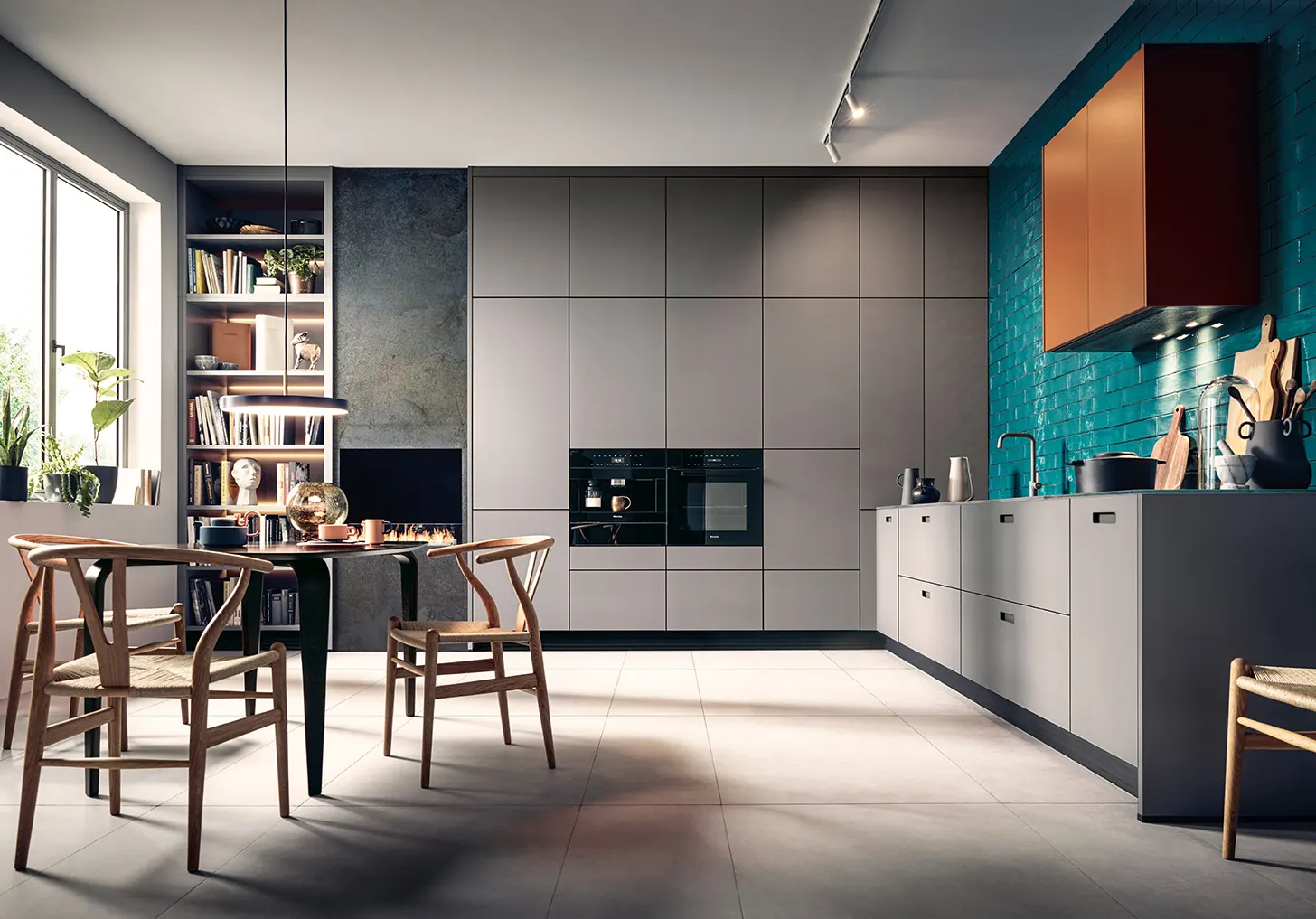
Germany has many kitchen makers, including well-known names such as Nobilia, Nolte, Leicht, SieMatic and Bulthaup, as well as the brands we show in Ruislip. Modenhaus shows three, so you can compare more than one design approach in the same showroom:
- Schüller: a German kitchen manufacturer offering a broad choice of styles, finishes and planning options. See our Schüller kitchens page.
- next125: a design-led German brand, known for contemporary, architecture-minded kitchens. See next125 kitchens, or read Schüller vs next125 to choose between them.
- Impuls: a German kitchen brand with a wide selection of designs. See Impuls kitchens.
Ranges and specifications change, so ask the studio for current information rather than relying on a web page. Brand names belong to their owners.
German vs British kitchens
Both countries have good and poor kitchens at every price. The differences that matter are in how the kitchen is made and supplied, rather than where it comes from.
| Point to compare | What to look for |
|---|---|
| How it is made | German kitchens are typically factory-made from a modular system to order. Many British kitchens are made the same way; others are built or finished locally. Ask how your kitchen is produced. |
| Planning flexibility | A wide range of unit sizes lets a planner fit a kitchen closely to the room. Ask how much of the plan is made to measure. |
| Lead time | Made-to-order kitchens take longer than off-the-shelf ranges. Ask for the programme in writing. |
| Service and fitting | This varies by supplier more than by country. Ask who surveys, fits and looks after the kitchen afterwards. |
Styles and finishes
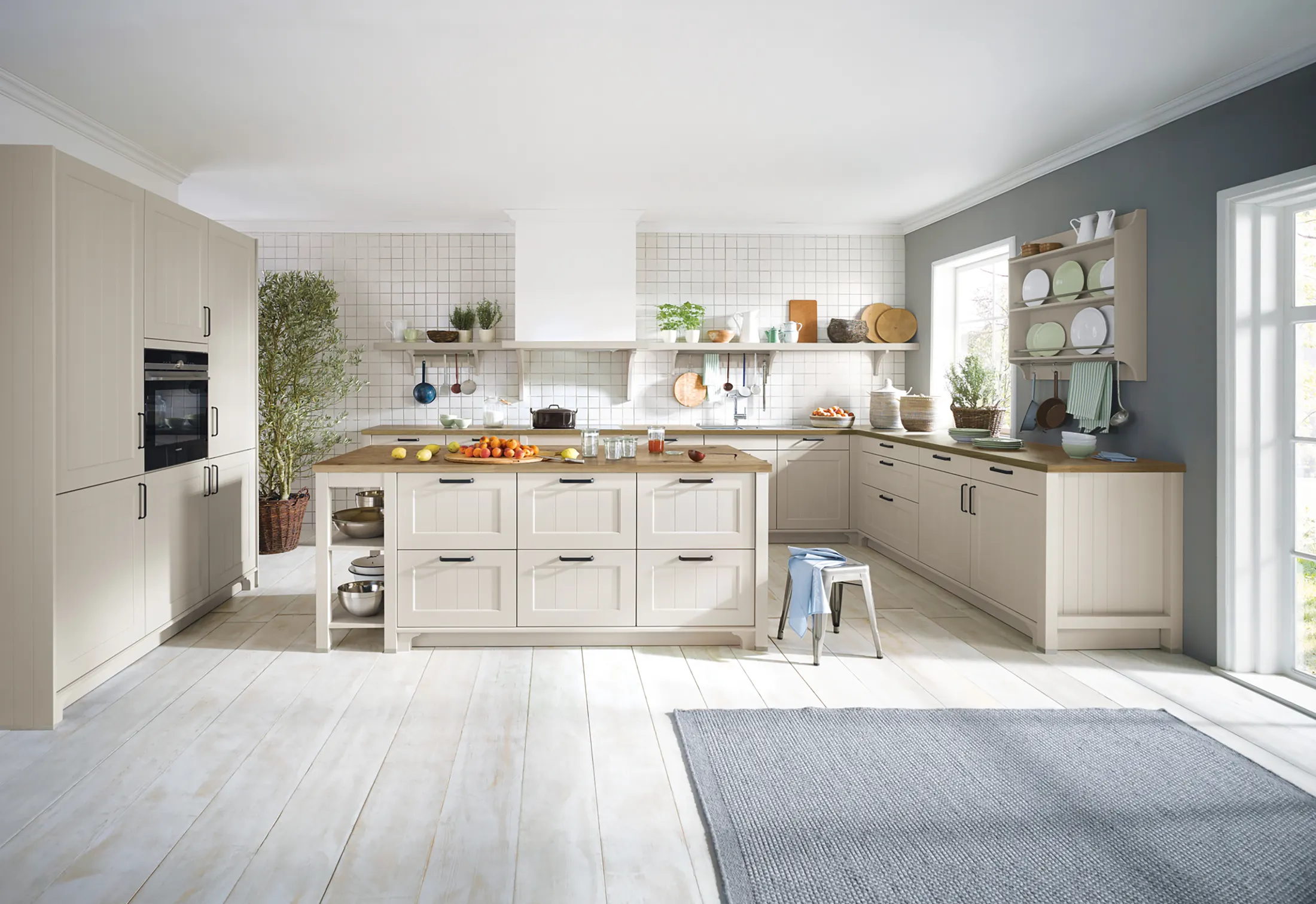
The brand sets the framework; the style sets the character. Popular directions include handleless fronts for continuous lines, modern shaker doors with a framed detail, contemporary timber for warmth and texture, and colour set against calm neutrals. If you have a colour in mind, our colour guides cover white kitchens, white and grey cabinets and white interiors. You can also compare handleless and modern shaker kitchens.
How to compare quotes
Two quotes called "German kitchen" can describe very different things. Ask each supplier to put the following in writing so you can compare them directly. Our full checklist for comparing kitchen quotes goes into more detail.
| Ask about | What a clear answer looks like |
|---|---|
| Brand and range | The named range and finish, not just "German". Ask to see the actual door sample. |
| Cabinet construction | The carcase material and thickness, how units are assembled, and how edges are finished. |
| Hardware | The drawer and hinge system named, with soft-close and internal fittings described. |
| Design and drawings | Plans, elevations and ideally a 3D view based on a measured survey, not a guess. |
| What is included | Whether worktops, appliances, sink, taps, extraction and lighting are in the price. |
| Installation | Who fits, what is covered (plumbing, electrics, making good) and how the programme runs. |
| Warranty and aftercare | The terms in writing, and who you call afterwards. |
What drives the cost
We do not publish a single price, because the cost of a German kitchen comes from a combination of choices: the size and layout, the door finish and range, storage fittings, the worktop, the appliances, sink and taps, and the installation and building work. The most reliable way to a number is a consultation, a measured survey and a written specification. Our kitchen renovation tips explain how to set a budget with a safety margin.
German kitchens in Ruislip and nearby
The Modenhaus showroom is at 113 Victoria Road, Ruislip, HA4 9BN, and shows German kitchens from Schüller, next125 and Impuls. We design and install kitchens for homes in Ruislip, Eastcote, Pinner, Northwood, Harrow, Uxbridge and across north-west London and the Home Counties. Arrange a showroom visit to see finishes, handles and worktop samples in person.
Is a German kitchen right for you?
A German kitchen is a strong choice if you want precise planning, a close fit to your room and well-organised storage, and you are happy to commission a made-to-order kitchen with a design and survey stage. It may be less suitable if you need a very fast turnaround or only want to change a few doors. Whatever you choose, judge it on the details: the specification, the drawings, the installer and the aftercare.
Common questions
Are German kitchens worth it?
They can be, if you value precise planning, a close fit to your room and well-organised storage. Quality varies between ranges and suppliers everywhere, so the useful test is a like-for-like comparison of construction, hardware, finishes, design and installation, in writing.
Are German kitchens more expensive than British kitchens?
Not automatically. German makers produce several ranges at different price points, and the same is true of British makers. The cost of any kitchen depends on size, layout, door finish, storage fittings, worktops, appliances and installation.
Where can I see German kitchens in Ruislip?
The Modenhaus showroom is at 113 Victoria Road, Ruislip, HA4 9BN, and shows German kitchens from Schüller, next125 and Impuls. Visits and design consultations are by appointment, so please call or email to arrange a time.
How long does a German kitchen take to arrive?
Cabinets are made to order and delivered, so allow for production and transport as well as design and surveying. Timings vary with the maker and the season, so ask for a written programme before you commit. Our process page lists the indicative stages we work to.
Can a German kitchen work in a small or awkward room?
Yes. Because cabinets come in many widths and heights, a planner can fit them closely to the room, including around chimney breasts, sloping ceilings and boilers. Good planning matters more than the brand.